




Chemical Materials
Chemical Materials
Chemical materials are the material basis for human survival and development. They are generally divided into metal materials, inorganic non-metallic materials, organic synthetic materials, and composite materials. Advanced materials are the basis for the development of high-end equipment manufacturing industry. Machinery, aerospace, rail transportation, shipbuilding, automobile, chemical industry, electronics, new energy, construction, national defense and other fields use a large number of new materials. With the rise and development of new Chinese industry, breakthroughs have been made in the development of special metal materials, polymer and its composite materials, engineering ceramic materials, cemented carbide and powder metallurgy materials, and degradable materials. The demand for research and testing, analysis and development, and quality control of chemical materials is also increasing day by day.

All categories

Analysis of rubber Product Composition
Rubber refers to a highly elastic polymer material with reversible deformation, which is elastic at room temperature, can produce large deformation under the action of a small external force, and can return to its original shape after removing the externa

Composition Analysis of Plastic Products
Plastics are polymer compounds (macromolecules) that are polymerized from monomers as raw materials through polyaddition or polycondensation reactions. They have medium resistance to deformation and are intermediate between fibers and rubber.

Analysis of the Composition of Adhesive Products
Adhesives are organic or inorganic, natural or synthetic substances of the same or two or more homogeneous or heterogeneous parts (or materials) that can be joined together and have sufficient strength after curing, also known as adhesives, binders, custo

Paint and Coating Product Composition Analysis
Paint is a continuous film that is applied to the surface of the object to be protected or decorated and can be firmly adhered to the object to be coated. It is usually a viscous liquid made of resin, or oil, or emulsion, with or without the addition of p
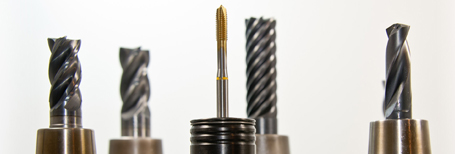
Product Composition Analysis of Metallic Materials
The composition and content of metals directly affect the properties and value of the material and a range of standardised testing methods have been developed by countries and industry organisations to study and test metals.

Composition Analysis of Electronic Chemical Materials
Electronic chemical materials, also known as electronic chemicals, refer to a wide range of fine chemicals and materials specifically designed for the electronics industry, namely integrated circuits, electronic components, printed circuit boards, industr
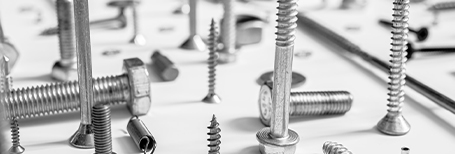
Mechanical Properties Testing
Mechanical properties of materials refer to the mechanical characteristics of materials when subjected to various applied loads (tensile, compression, bending, torsion, impact, alternating stress, etc.) under different environments (temperature, media, hu

Combustion Performance Testing
Combustion performance refers to all the physical and chemical changes that occur when the material burns or encounters fire, and this performance is measured by the characteristics of the material surface ignition and flame propagation, heat, smoke, ch

Reliability Performance Testing
Early in the development phase of a product, design flaws are identified and improved mainly through experimentation, and then new problems are identified through further testing. Experience shows that about 70% of the design defects can only be found by